

What to Fix Before Q4 Gets Busy
Most wedding businesses think about Q4 marketing when Q4 arrives
A strong wedding vendor marketing strategy isn't about getting more people to notice your brand. It's about making it easy for the right person to move from "I like this" to "I trust this" to "I want to inquire" — and that journey usually involves much more than one Instagram post.
Most wedding businesses only start thinking seriously about Q4 marketing once Q4 arrives. By then, campaigns are being rushed into place, inboxes are getting busier, year-end goals feel suddenly urgent, and everyone is trying to make their marketing work harder at the same time.
A stronger approach starts earlier. Before adding another campaign, posting more often, or increasing an ad budget, it's worth taking a closer look at the marketing foundation already in place.

What a Strong Wedding Vendor Marketing Strategy Includes
Wedding vendor marketing is the connected system you use to help potential clients discover, understand, trust, and eventually choose your business. Each channel plays a different role in that system:
Social media creates initial awareness.
Your website explains your services and establishes trust.
SEO helps people discover you when they're actively searching.
Email gives you a way to continue the conversation over time.
Paid advertising expands your reach or brings previous visitors back.
Reviews, testimonials, your Google Business Profile, directories, and collaborations provide the social proof that ties it all together.
The mistake most vendors make is thinking about each of these channels separately. In reality, someone might discover your work on Instagram, Google your business name later, visit your website, read two testimonials, save your page, and return weeks later when they're finally ready to inquire. Your marketing needs to support that entire journey, not just the first touchpoint.

Start With the First Impression You're Not Posting
When brands think about first impressions, they usually think about social media. But your latest Reel may not be the first thing a potential client actually sees. It could just as easily be:
Your Google listing
Your homepage
Your Instagram bio
A venue tag
An old blog post
A vendor directory listing
A recommendation generated by an AI search tool
That makes a simple pre-Q4 brand audit incredibly valuable. Search your business name as if you'd never heard of it before. Open your website on your phone. Click the link in your Instagram bio. Visit your contact page. Read the description showing up in Google.
Then ask a more important question than "does this look good?" Ask: does this make sense to someone discovering us for the first time? Beautiful marketing gets attention. Clear marketing makes the next step feel easy.
Your Website Should Answer Five Questions Quickly
Wedding websites carry a particularly important job, because couples are making highly personal — and often expensive — decisions. Your site needs to provide reassurance fast. A new visitor should be able to quickly understand:
What do you do?
Who is it for?
Where do you work?
Why should someone trust you?
What should they do next?
If those answers require five pages and several minutes of searching, there's unnecessary friction in the customer journey. This doesn't mean turning an elevated website into a sales page full of oversized buttons — it means being intentional. A beautiful homepage headline can still be specific. A luxury service page can still explain what's included. A polished inquiry experience can still make the call to action obvious. The strongest websites balance emotion with clarity.
Audit the Journey From Instagram to Inquiry
One of the easiest ways to improve marketing for wedding vendors is to test the complete path a potential client takes:
They discover a post → visit your profile → read your bio → click your link → reach your website → explore your services → look for proof → decide whether to inquire.
Every transition in that chain creates an opportunity for momentum, or for hesitation. A few common breakdowns:
Your Instagram promotes full-service wedding planning, but your homepage still emphasizes month-of coordination — the story becomes disconnected.
An ad promotes a specific rental collection, but lands on a general homepage — you're asking the visitor to go find the product again.
A Reel says "inquire through the link in bio," but the link opens a page with six unrelated options — you've created another decision instead of removing one.
Small friction points matter. Your goal is to remove unnecessary thinking between interest and action.
Make Trust Easy to Find
Wedding clients aren't only buying a final product — they're choosing people they'll trust with an important, once-in-a-lifetime experience. Your online presence should make that trust visible through things like recent testimonials, recognizable venues, full galleries, vendor collaborations, press, case studies, FAQs, behind-the-scenes content, and examples that show how you actually work.
Instead of simply saying you provide a "seamless experience," show what creates that experience:
Do you respond quickly?
Do you handle logistics?
Do you work closely with planners?
Do you build backup plans?
Do you manage timelines?
Do you source custom pieces?
Do you provide detailed client communication?
Specific proof is more convincing than polished adjectives. It also gives search engines and AI platforms more concrete context for understanding what your company actually specializes in — which matters more than ever as discovery shifts toward AI-assisted search.
Review Your Wedding Vendor SEO Before Busy Season
SEO shouldn't feel separate from the rest of your marketing. At its simplest, wedding vendor SEO helps search engines understand what you offer, who you serve, and where you provide it.

Start with your highest-intent pages
Your homepage and service pages should clearly communicate your service and your geographic market. A Tampa wedding florist, for example, shouldn't rely entirely on beautiful imagery and assume Google — or a first-time visitor — will understand where the business works. Location should be stated clearly wherever it's relevant and natural to the copy.
Go beyond repeating city names

For businesses serving specific areas — Tampa, St. Petersburg, Clearwater, Sarasota, or wherever your actual service area is — local content should demonstrate real expertise in that market, not just mention it:
Feature real weddings you've worked on in that area.
Mention venues you genuinely work with.
Create useful, location-specific resources.
Keep your Google Business Profile current.
Collect meaningful, recent reviews.
Make sure your contact information is consistent everywhere.
Local SEO works best when your actual expertise within the market is visible, not just claimed.
Prepare Your Content for AI-Assisted Discovery Too
Search behavior is evolving. Couples can now ask an AI assistant questions like "who are the best editorial wedding photographers in Tampa?" or "find luxury wedding planners in St. Petersburg who specialize in modern coastal weddings." That changes the level of context your website needs to provide.
You don't need to write robotic copy for AI — quite the opposite. Google's current guidance on AI-powered search continues to emphasize clear, valuable, original content over separate optimization tricks. In practice, that means you should:
Make your expertise explicit.
Clearly name the markets you genuinely serve.
Publish useful insight drawn from real experience.
Show the type of work you want to be known for.
Answer the questions clients ask you repeatedly.
The easier it is for people to understand your business, the easier it becomes for search platforms to connect your brand with the right query.
Check the Marketing Details Behind the Scenes
Some of the highest-impact marketing improvements are also the least glamorous. Before Q4, test every piece responsible for turning attention into an actual lead:
Submit your own inquiry form and confirm the notification arrives.
Review your automated confirmation email.
Click every booking link.
Check your mobile website experience.
Review your service information and pricing language.
Confirm your lead magnets still deliver properly.
Look at the pages your ads are actually sending traffic to.
Review your title tags and meta descriptions.
Make sure your phone number, email, location, and links are current everywhere your business appears.
This is where marketing becomes more than visibility. It becomes infrastructure.
The Goal Is a Better-Connected Brand, Not More Marketing
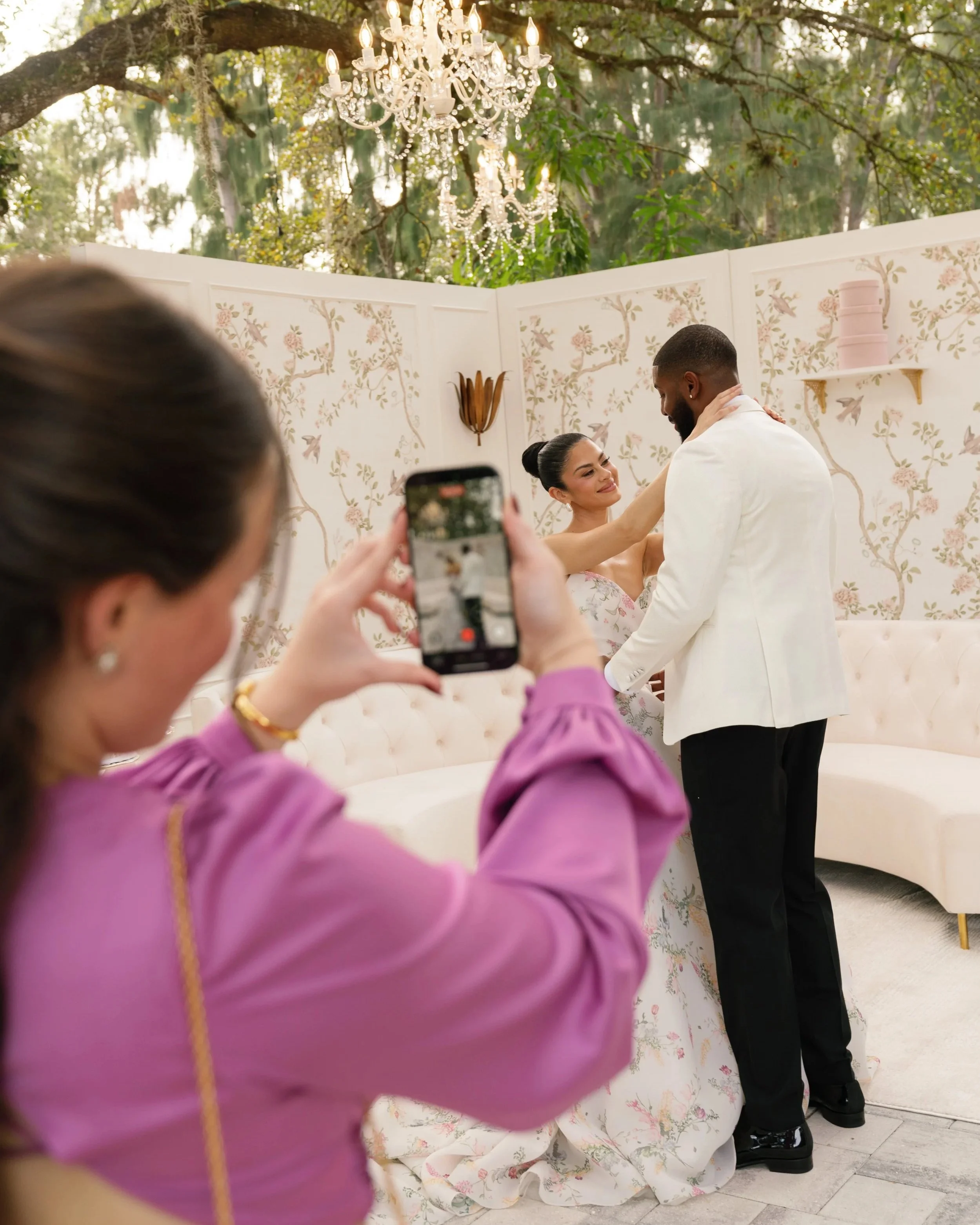
There will always be another platform to post on, another campaign to launch, and another tactic someone insists your business needs. But before a busy season, more isn't always the answer. Sometimes the most valuable thing you can do is make what already exists work better together:
Your social media should create interest.
Your website should deepen trust.
Your SEO should support discovery.
Your content should demonstrate expertise.
Your email should continue the relationship.
Your inquiry process should make taking the next step simple.
That's what makes a brand feel polished — not simply how it looks, but how intentionally the entire experience has been built.
If your wedding brand's marketing feels disconnected, this is a good time to review the journey before adding more to it. Mooi Social offers strategy sessions for brands that want a clearer, more intentional approach to their content, website, visibility, and digital marketing before the next busy season begins.
Because the strongest setup is rarely about starting over. It's about refining what's already there.
Ready to see where your journey breaks down? Book a strategy session with Mooi Social to get a clear, intentional plan for your content, website, and visibility before Q4.